SOUL PAINT
The UK’s First Digital Creative Health Tour
If you are interested in showcasing Soul Paint please reach out
THE EMOTIONAL ECONOMY: How creative innovation is enabling new forms of self expression and community connection
Each day that we open our phones or turn on the news, we are brutally conscious that we live in an era of deep polarisation and disconnection. To find a state of equilibrium, we as a society we are increasingly drawn to more authentic, immersive and participatory experiences to create a sense of grounding, and to create bridges between one another. Our society has shifted from an information driven to one that aspires to put our emotional and social wellbeing at the centre.
We communicate constantly through screens, messages, feeds and platforms, yet most of us struggle to describe how they actually feel - even to ourselves. Public conversation around mental health has expanded dramatically over the last decade, with demands on mental health services also increasing at an unnervingly rapid rate. Yet, true emotional expression often remains flattened into labels, statistics, or text on a screen. We are encouraged to talk, but still stuggle to find the right way to communicate and express ourselves. With a reduction in support of access to the arts and life and technology demanding more and more of our time, we are losing spaces to dream, to reflect and to create.
At the same time, immersive technologies are rapidly becoming part of public life. Virtual reality, games and digital worlds are reshaping how we work, socialise and imagine ourselves. Yet much of this technology remains focused on spectacle, productivity or escape rather than something deeply human.
What if immersive technology could instead help us reconnect with ourselves, our bodies, and each other more deeply? How can we create new forms of creative expression and language when words just often are not enough?
Soul Paint does exactly that, by asking audiences a deceptively simple question:
Where are you feeling?
Soul Paint is an attempt to return play to its oldest purpose: not distraction, but discovery. A space set apart, where something true can be made and witnessed.
A fractured relationship with ourselves
We are, by nature, players. In 1938, the historian Johan Huizinga gave us the term Homo Ludens — the human being defined not by what we make or think, but by what we play. He argued that play isn't a break from culture; it's the soil culture grows from. Ritual, art, language, even law. All of it, he suggested, has its roots in the simple human instinct to enter a space set apart from ordinary life and make meaning there, freely, together.
Somewhere along the way, many of us lost access to that space. We are hyper-connected through our devices, yet quietly, persistently more alone staring into the void seeking a way to understand ourselves more deeply. AI and digital technologies are increasingly creative cognitive outsourcing, stopping us from thinking for ourselves. Equally, digital wearables are inviting us to somatically outsource. Our smart watches and rings enables technology to tell us how we feel, instead of knowing for ourselves. We can narrate the news in real time but stumble describing what is happening, right now, in our own bodies feels impossible. We have outsourced so much of our communication to the symbolic and the textual that we've grown distant from our most precious instrument: the body itself.
This isn't just a cultural observation, it's a physiological one. The field of interoception, our internal sense of the body's signals, shows that emotional awareness depends on how well we can sense and interpret what's happening inside us: a racing pulse, a tightening jaw, a held breath. When that internal signal goes unheard for long enough, we don't simply lose vocabulary for our feelings, we lose access to them.
The body as interface
We tend to talk about emotion as something abstract. But emotion is profoundly physical. Stress tightens the jaw. Fear quickens the heartbeat. Grief settles in the chest. Joy can feel light and expansive. Trauma often lives in the body long after words fail us.
Most digital tools remain text-based and disembodied — built for the head, not the body. Soul Paint asks a different question: can immersive art create a new visual language for human feeling, one rooted in the body itself?
Audience responses gathered across exhibitions and festivals consistently reveal recurring themes:
increased emotional awareness
feelings of empathy and connection
reflection on mind-body relationships
creative confidence and self-expression
reduced feelings of isolation
new conversations around mental health and lived experience
Perhaps most importantly, audiences often describe a sense of recognition — the realisation that other people are carrying invisible emotional worlds too. In a time marked by loneliness, fragmentation and anxiety, that recognition can be powerful.
What Soul Paint is
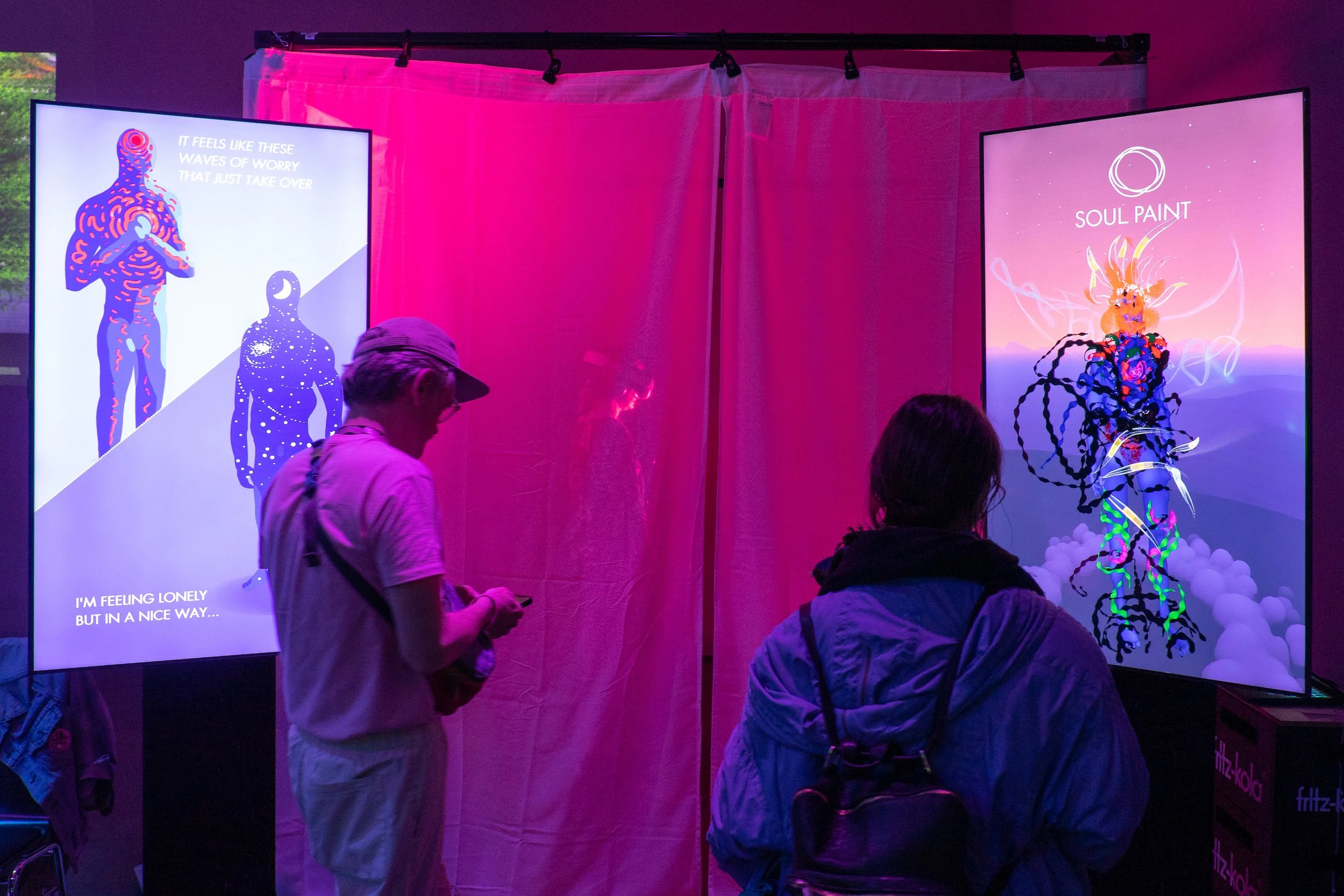
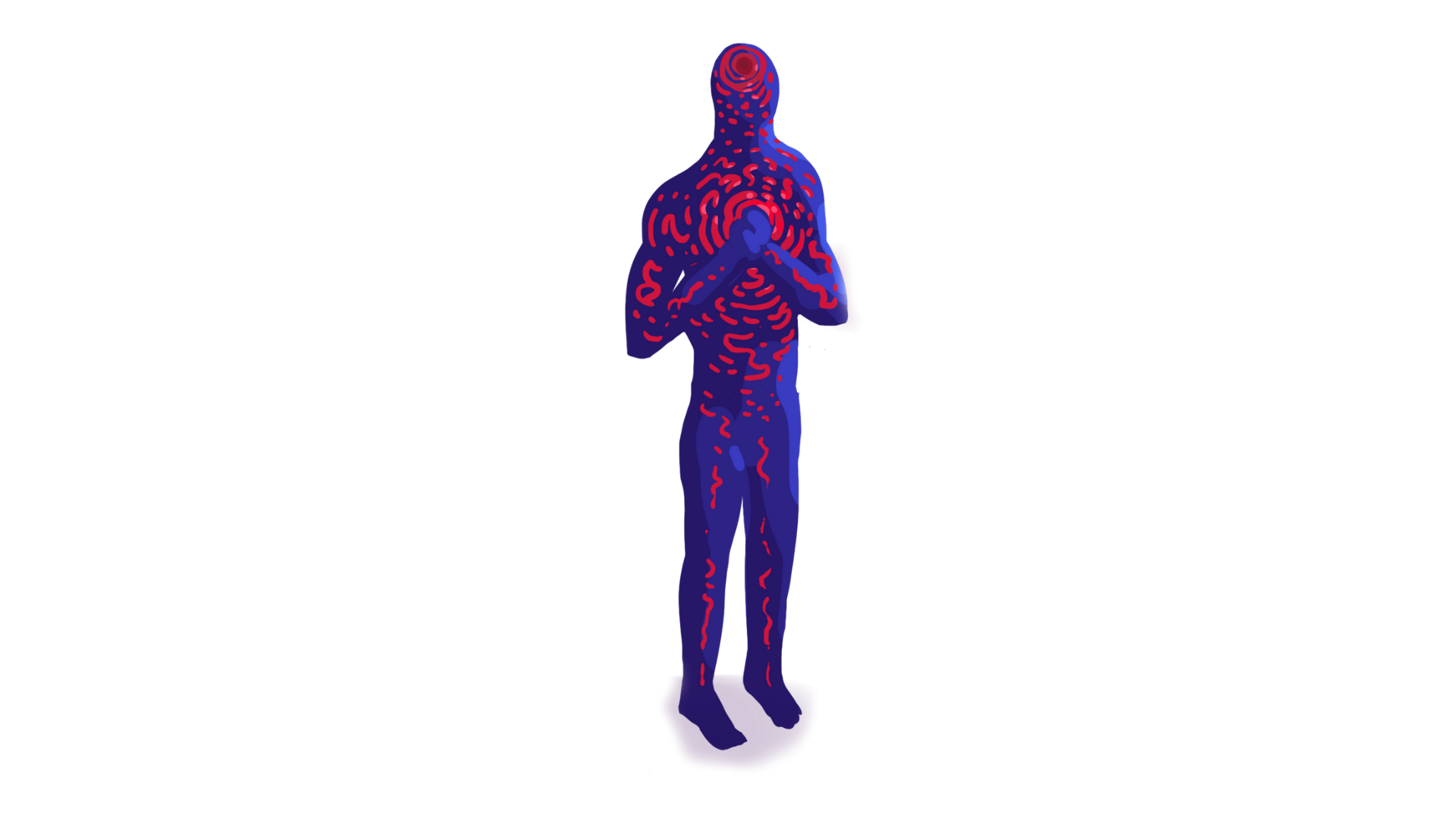
Soul Paint is a multi-award-winning immersive artwork created with Niki Smit and narrated by Rosario Dawson, developed alongside behavioural scientists, psychologists and wellbeing researchers. Inside the experience, participants paint their emotional and physical sensations directly onto a virtual representation of their own body — not naming a feeling, but locating it, in the chest, the throat, the shoulders, the hands, and turning it into colour, shape and texture.
Fear might become a tight grey knot. Joy might spread as warm gold across the shoulders. Anxiety might appear as static around the head. Grief might move slowly through the limbs like smoke.
Each person creates a unique emotional self-portrait. And each portrait becomes part of something larger.
The UK's first digital creative health tour
Soul Paint is the UK's first touring digital creative health experience of its kind — designed specifically to help people reconnect to their bodies and to each other, in public, communal settings, through embodiment, creativity and play.
It's not therapy, and it doesn't claim to be a clinical intervention. It's an artwork. But art has always helped people process experience, make meaning and connect with others, and there's growing recognition across the UK that cultural participation is a genuine driver of emotional wellbeing. Soul Paint sits deliberately in that space between immersive art, public participation and creative health. Alongside a team of local partners and researcher partners, impact research will be gathered along the way to explore how the work improves individual and community outcomes, and creating new national insights across its tour.
A collective emotional landscape
Soul Paint isn't a single, closed experience — it's the beginning of a growing collective artwork. As the project tours to new cities and communities, every participant adds to an expanding archive of emotional expression: an Atlas of Feeling. Inside the touring exhibition, visitors encounter projections and digital beings generated from the artworks of everyone who came before them. The installation becomes part gallery, part immersive environment, part emotional commons — a space where you can see how people elsewhere visualise fear, hope, grief or joy, and recognise something of your own experience in theirs.
Each venue, each city, adds to the portrait.
Why this resonates with venues and communities
Venues, museums, festivals and civic partners are increasingly being asked to do more than simply present work. They're exploring how culture can:
support wellbeing
engage underserved audiences
activate public space
create intergenerational participation
attract younger audiences
contribute to local identity
support regeneration
build meaningful community connection
Soul Paint aligns strongly with these ambitions because it operates across multiple cultural contexts simultaneously. It can exist as:
a gallery installation
a touring immersive exhibition
a festival experience
a public engagement project
a creative health programme
a research tool
a community participation initiative
It lowers the barrier to entry. Because the starting point is emotional rather than technical or art-historical, it reaches people who might never normally pick up a VR headset or walk into a gallery. For many participants, it's their first encounter not just with immersive technology, but with creative expression itself.
It's genuinely participatory, not spectacle. People aren't observers inside someone else's digital world — they're the author of what they make. That shift, from consuming to creating, is what makes the experience stick.
It gives venues a tangible answer to a hard question. Cultural organisations are under pressure to prove cultural and social value at once. Soul Paint does both: it's a striking immersive artwork, and a measurable contribution to creative health and community wellbeing.
It builds something cumulative. Because every showing adds to the Atlas of Feeling, no two presentations are the same — and each venue becomes part of a growing national, and eventually international, portrait.
Touring 2027 and beyond
In 2027, Soul Paint will tour the UK and internationally. The project is currently seeking:
touring venues
festival partners
museums and galleries
universities and research collaborators
creative health organisations
local authority and regeneration partners
wellbeing and public engagement partners
So when we ask the question at the heart of Soul Paint — where are you feeling? — we're not just asking individuals. We're asking it of a whole society, one body, one city, one community at a time.
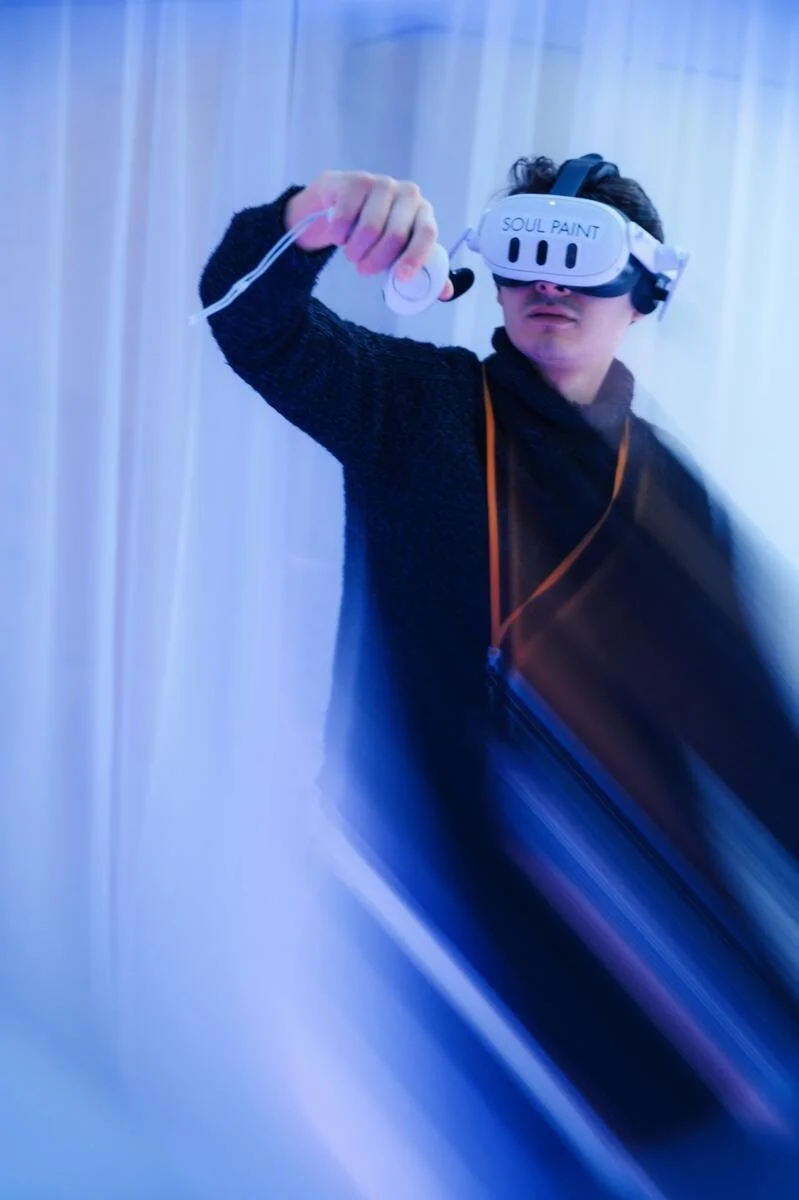
Photo by Lawrence Sumulong, © Lincoln Center
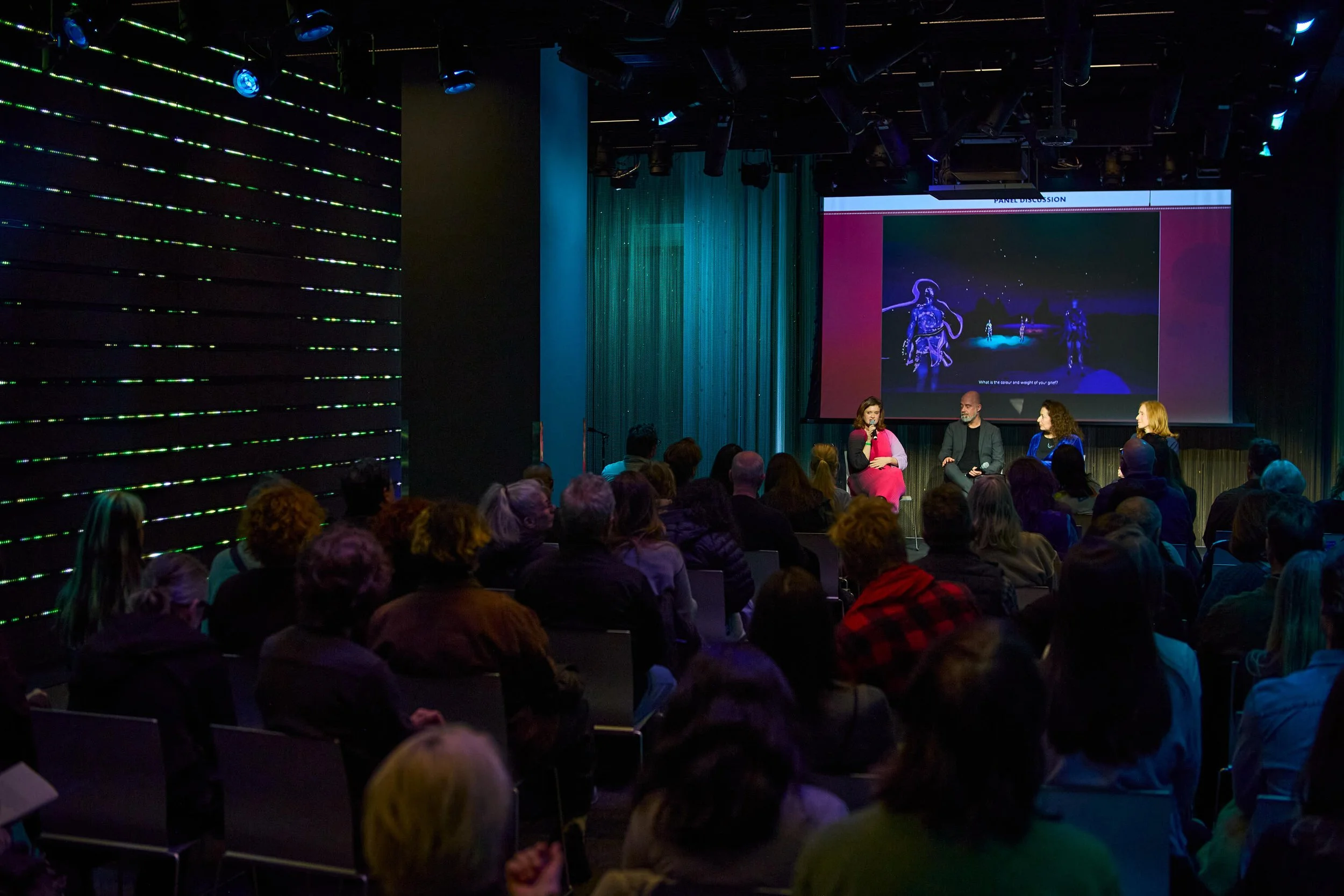
Heartbeat Summit: SoulPaint:m Unveiling New York’s Inner Stories Panel
Featuring Soul Paint Co-directors Sarah Ticho & Niki Smit, Executive Producer Liz Rosenthal and Executive in Residence, Columbia Mailman School of Public Health, Chair, Northwell Health Margaret Crotty
Photo by Shelby Antel, © Lincoln Center
Immersive work like Soul Paint is no longer a side attraction tacked onto a performing arts calendar. At the Lincoln Center for the Performing Arts in New York, it is increasingly treated as a programming language- one that can expand access, strengthen community ties, and give artists new ways to stage emotion, memory, and presence.
Jordana Leigh | VP Artistic Programming | LINCOLN CENTER
in interview with XR MUST
Our Process

Confirm a Venue
Together, we outline a path forward that’s realistic, strategic, and tailored to your specific needs.
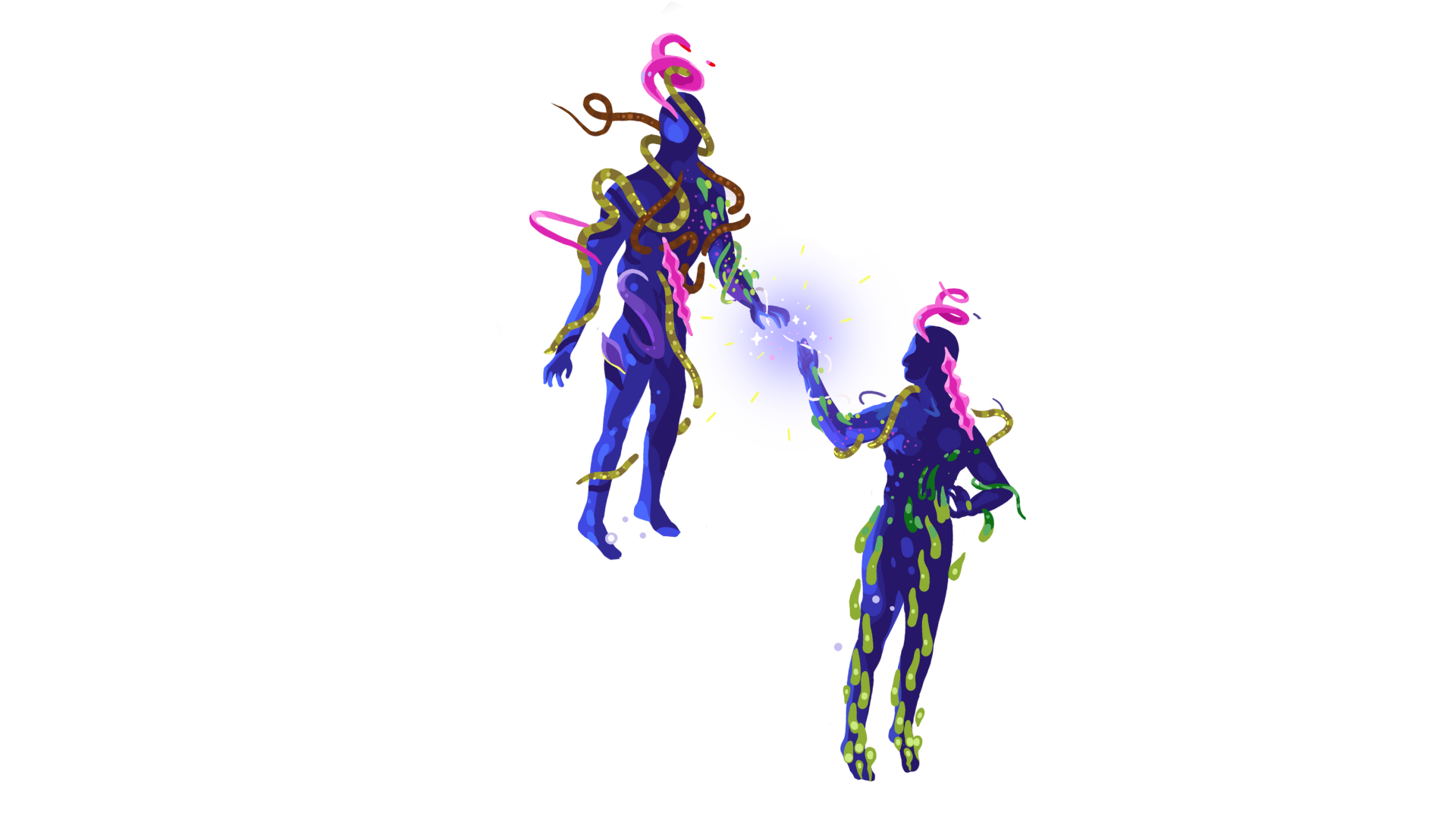
Find a Community Partner
Finding partner organisations that are committed to expanding community engagement
Plan with Purpose
Explore different events and workshops to accompany the piece
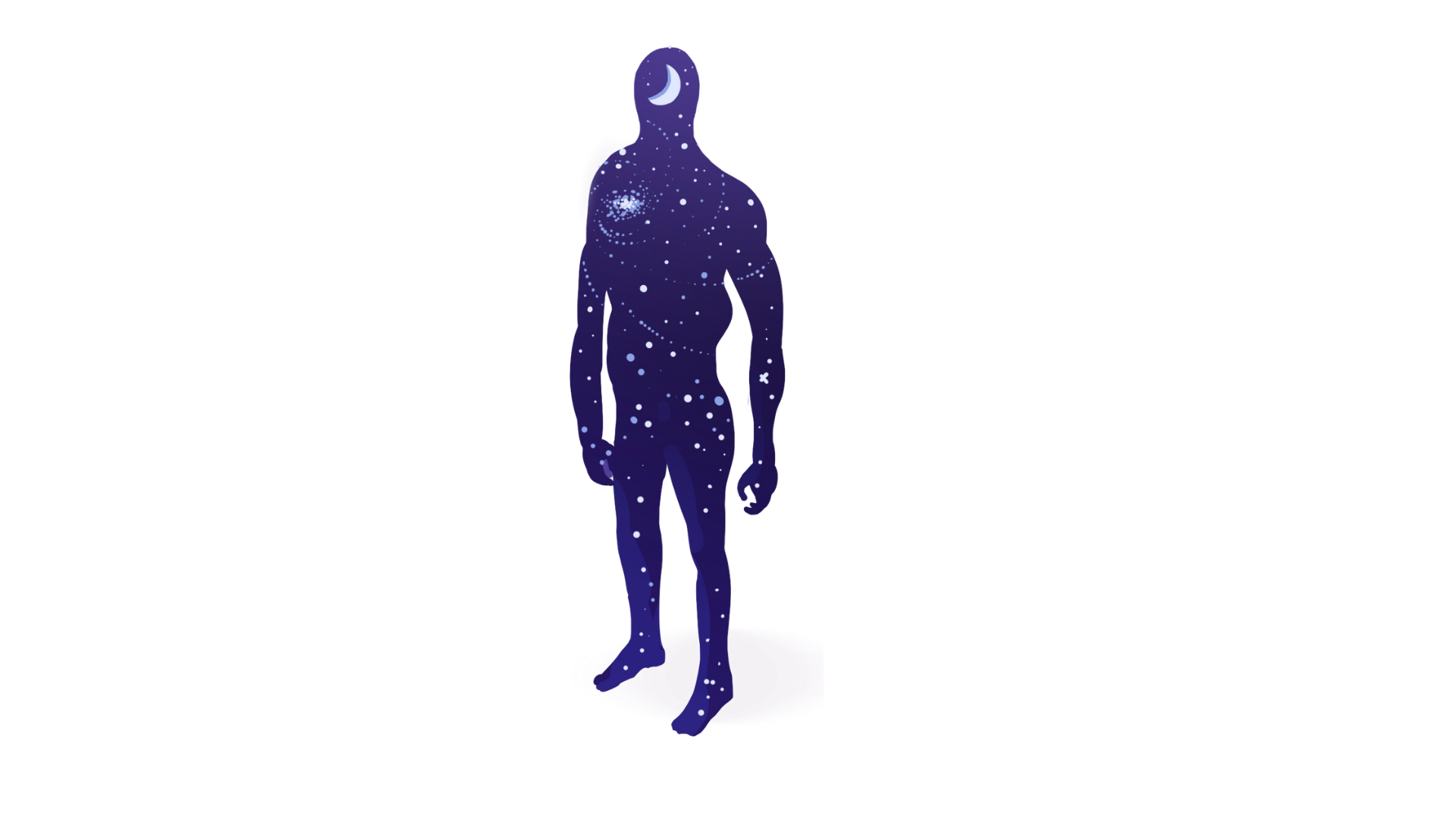
Research and Evaluate
Work with Soul Paint research partners to research, evaluate and share the impact of the piece