Healthcare
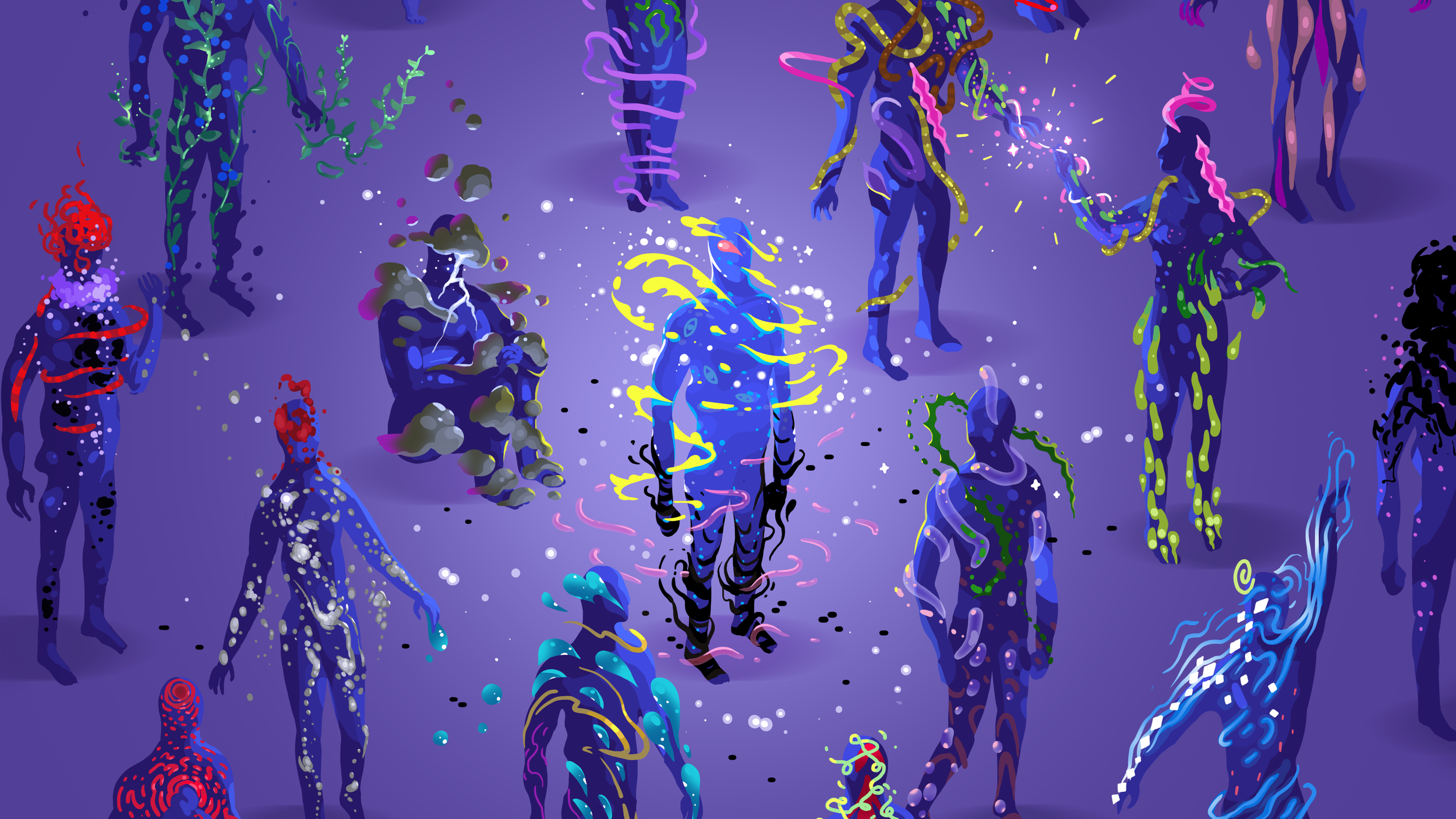
We help people understand themselves and each other better to improve outcomes for everyone.
Over the past few years, extensive exploratory research has been undertaken with Soul Paint at festivals, arts centres, schools, care institutions, and libraries with thousands of participants with various ages and backgrounds including healthcare practitioners.
Research so far has primarily focused on gathering first impressions and user experience feedback as well as exploring different ways and contexts in which Soul Paint could have a meaningful impact.
We are excited to study how Soul Paint can answer more fundamental questions about (cross-cultural differences in) the human experience and the mind-body connection including themes of: emotional awareness and expression, embodiment, and social connectedness.
Within exploratory research settings, several potential areas of clinical relevance have been explored. These include:
Strengthening interoceptive awareness;
Improving communication and alliance between patients and practitioners;
Monitoring treatment progress;
Facilitating goal setting through visualising future imagined selves.
Key applications within healthcare settings have been explored including the support of people with chronic pain, eating disorders, trauma, and various other physical and mental challenges. In addition, various care pathways have been explored including social prescribing and clinical research.
We will continue to expand on this research determining the value, efficacy, as well as the health economics involved in using Soul Paint in healthcare contexts. No formal clinical trials have yet been performed, but we are preparing for this in future research collaborations.








RESEARCH
CONNEXT XR TOOLKIT
Research into improving public wellbeing in community settings.
In collaboration with social prescribers, healthcare specialists, librarians, XR and healthcare researchers and the public, we ran two pilots at Maidenhead Library and South Devon College over two weeks to explore Soul Paint's feasibility to improve public wellbeing in community settings.
In the 131 people sampled, 61% felt negative or neutral before Soul Paint and 76% felt positive after the experience: a 95% increase in positive feelings.
78% of Maidenhead Library participants and 82% of South Devon College participants indicated that they would do the experience again. Results strongly suggest that participants saw Soul Paint as a useful tool for checking in with emotional and physical wellbeing with which they would like to periodically re-engage.

Neuroaesthetics—Design for the Mind
‘Neuroaesthetics—Design for the Mind’ is a cultural study created in collaboration with FSB Franz Schneider Brakel, exploring the emerging field of neuroaesthetics and its vast potential in design.
Diving deep into the impacts of a growing movement first explored in our Further Forecast 2024, ‘Neuroaesthetics—Design for the Mind’, is a new cultural study on neuroaesthetics, uncovering how aesthetics, culture, and technology impact our brains, bodies, and behaviors.
A recent report found that people in developed countries spend over 90% of their time in built environments. What’s more, a 2023 survey in the UK revealed that 73% of people believe the way buildings look impacts their mental health.
These findings underline the importance of applying the science of neuroaesthetics to the creation of spaces: designing for emotion can be viewed as a necessary function, as emotions are our most powerful physiological sensation and support our decision making, wellbeing, and states of balance.
When armed with new insights on neuroaesthetics, we can revolutionize design, creating a future where designing for emotion as a function begins to steer creative briefs and leads to more impactful results.
Researched and developed by neuroaesthetics studio Kinda Studios and created in partnership with FSB, the study collates insights across science, technology, and the arts, and features interviews with renowned voices including artist Refik Anadol, neuroaesthetics architect and designer Suchi Reddy, and neuroscientist Anjan Chatterjee and Soul Paint.

CREATIVE INDUSTRIES COUNCIL AND ARTS COUNCIL ENGLAND HEALTH AND WELLBEING FORUM
Soul Paint named leading case study of creative health in the United Kingdom.
A new report highlighting how creativity is improving the nation’s health & wellbeing - and saving the NHS money - has been published by the Creative Industries Council & Arts Council England.
The report demonstrates how creative activity - from music and theatre to reading, dance,design and immersive technologies - can treat and prevent illness, reducing pressure on the NHS.
It highlights that with the right training and support, wider provision of creative health could also create new job and business growth opportunities for creative practitioners.
The report draws on evidence, case studies, and expert insight to make five recommendations to move the creative health agenda forward:
● Expanding opportunities for children and young people to take part in creative activities, in and out of school and hospital settings.
● Raising awareness of the health benefits of creativity through a public campaign.
● Building and sharing the evidence base to inform health leaders and policymakers.
● Strengthening dialogue with the health sector to align with the NHS’s ten-year plan.
● Supporting the creative workforce through skills, fair pay and wellbeing measures.
Soul Paint has also been a leading creative health case study by Arts Council England - you can read more about the project and their specific work to support creative health here.